

WHAT WE DO
From ambitious ideas to tangible, real-world solutions
We help companies, government entities, cultural institutions, startups and multidisciplinary teams explore emerging opportunities, solve complex challenges and transform ambitious ideas into strategies, prototypes, products, platforms and experiences.
Our work sits at the intersection of design, technology and research. We bring together innovation strategy, applied research, product design, digital development, artificial intelligence, data, material experimentation and advanced fabrication within one integrated R&D process.
Whether you have a clearly defined challenge or an early idea that still needs direction, we help you determine what should be developed, why it matters, how it could work and what needs to be tested before committing to full-scale implementation.
AN EXTERNAL R&D AND INNOVATION PARTNER
Do you want to innovate—and need help moving forward?
You may be looking to:
Turn an ambitious vision into a tangible proof of concept
Explore a new technology, material or opportunity
Develop a physical, digital or hybrid product
Apply AI meaningfully within your organization
Transform a complex service or user experience
Build a dashboard, platform or intelligent system
Test an idea before committing to full implementation
Activate innovation capabilities within your team
IBDÅ can operate as your external R&D team, innovation partner or specialist extension of an existing internal team.
We bring together the researchers, strategists, designers, developers, engineers and makers required to move from exploration to execution—without separating strategy, design, technology and prototyping into disconnected processes.
Innovate. Build. Deliver.
OUR CAPABILITIES
What can we help you develop?
Our projects vary in scale, format and sector. Some begin with a strategic question. Others begin with an emerging technology, an unresolved challenge, a material, a dataset or an idea that needs to become tangible.
CAPABILITY 01
Innovation Strategy & Applied R&D
We help organizations investigate opportunities, frame complex challenges and translate research into actionable strategies, concepts, experiments and proofs of concept.
-
Organizations often know that they need to innovate but are less certain about where to begin, which opportunities matter or how emerging technologies connect to their strategic priorities.
We help leadership and innovation teams identify meaningful areas for intervention, assess alternative directions and define what should be investigated or developed next.
Our innovation strategy services can include:
Innovation opportunity identification
Problem and opportunity framing
Organizational and contextual research
Trend and emerging-technology research
Market and precedent research
Stakeholder interviews and workshops
Concept generation and prioritization
Innovation portfolio development
Strategic frameworks
Innovation roadmaps
Pilot and implementation planning
Rather than producing a future vision that remains abstract, we connect strategy to tangible concepts, experiments and development pathways.
-
We use design research to understand people, contexts, behaviors, experiences and systems before deciding what to build.
Depending on the project, research may involve:
Stakeholder and user interviews
Contextual inquiry
Observational research
Experience and journey mapping
Service analysis
User-needs identification
Opportunity mapping
Precedent and comparative research
Co-design activities
Research synthesis and visualization
Actionable design principles
Our goal is not simply to collect information. We translate research into clear opportunities, design directions and decisions that can guide development.
-
Many innovation challenges are not isolated product or service problems. They exist within wider networks of stakeholders, initiatives, policies, technologies, resources and dependencies.
We make these systems visible so organizations can understand relationships, identify gaps and recognize opportunities for coordination.
Our systems and ecosystem work can include:
Stakeholder mapping
Ecosystem mapping
Value-chain mapping
Initiative and mandate mapping
Service and information-flow mapping
Network visualization
Gap and overlap analysis
Dependency and relationship mapping
Opportunity and synergy identification
Strategic system visualizations
These tools can support organizational strategy, government innovation, cross-entity coordination, public programs and complex multidisciplinary initiatives.
-
We help organizations explore how technological, societal and environmental change could affect their sector, services and stakeholders.
Our futures work can include:
Horizon scanning
Emerging-technology research
Trend analysis
Drivers-of-change mapping
Future scenarios
Speculative concepts
Opportunity and risk identification
Future user journeys
Strategic provocations
Future product and service concepts
The aim is not to predict one fixed future. It is to create informed possibilities that help organizations make stronger decisions in the present.
-
A promising idea needs more than a presentation. It needs evidence.
We turn hypotheses, technologies and early concepts into tangible proofs of concept that can be demonstrated, evaluated and tested.
A proof of concept can help answer:
Can the idea work?
Is the technology appropriate?
How might people interact with it?
What are the main technical or operational risks?
Which assumptions require further testing?
Is the opportunity ready for investment, piloting or development?
Depending on the project, we can develop a digital, physical, material or hybrid proof of concept involving software, interfaces, connected hardware, sensors, AI, data, product design or fabrication.
-
An innovation strategy or applied R&D project may result in:
Research findings
Opportunity areas
Stakeholder and ecosystem maps
Future scenarios
Strategic frameworks
Prioritized concepts
User and service journeys
Technical feasibility findings
Technology recommendations
Experimental prototypes
Functional proofs of concept
Testing and validation findings
Innovation roadmaps
Pilot recommendations
Implementation pathways
The exact outputs are determined by the question the project needs to answer.
CAPABILITY 02
Product & Industrial Design
We design physical and hybrid products that connect form, function, user experience, technology and manufacturing—from early concept to functional prototype.
-
We begin by understanding the product opportunity, intended users, context of use and wider system in which the product will operate.
Product strategy and research can include:
Opportunity and market research
User and stakeholder research
Product audits
User-needs identification
Context-of-use research
Competitive and precedent analysis
Product-positioning exploration
Feature definition and prioritization
Product ecosystem mapping
Design criteria and requirements
Product-development roadmaps
This foundation helps ensure that the product responds to a meaningful need and that design decisions remain aligned with the intended experience and business context.
-
We transform research and requirements into physical product concepts that can be visualized, assessed and refined.
Our industrial design capabilities include:
Ideation and concept development
Sketching and design visualization
Form and proportion studies
Ergonomic considerations
Product architecture
Component organization
Spatial and operational studies
Material and finish exploration
3D modelling and CAD development
Design refinement
Presentation visualizations
Technical design communication
We evaluate how the product looks, feels, operates and communicates its purpose.
-
Many contemporary products combine physical components with sensors, embedded technologies, data and digital interfaces.
We design these elements as one coordinated experience.
Connected-product development can include:
Smart-product strategy
Sensor and technology integration
Hardware and interface coordination
Embedded interaction concepts
Connected user journeys
Real-time system feedback
Companion interfaces and dashboards
IoT integration
Data-informed product behavior
AI-enabled product concepts
Physical–digital prototyping
Our work on Quantum Qi brought together industrial design, spatial design, connected technologies, UX/UI and frontend development within an integrated longevity system.
-
Prototypes make product ideas tangible and reveal issues that drawings and visualizations cannot.
We develop prototypes at different levels of fidelity depending on what must be tested.
This can include:
Form and scale models
Ergonomic prototypes
Appearance models
Functional prototypes
3D-printed components
Fabricated assemblies
Hardware-integration prototypes
Interactive demonstrators
User-testing prototypes
Iterative prototype refinement
We can coordinate physical prototyping with digital interfaces, connected devices and software development when the product requires them.
-
We support the transition from a design concept toward a product that can be fabricated or further engineered.
Our contribution can include:
Material and process research
Manufacturing feasibility exploration
Design-for-fabrication considerations
Component and assembly studies
Technical drawings
Fabrication communication
Supplier and specialist coordination
Prototype-production oversight
Testing and design refinement
Development documentation
Where specialist engineering, certification or mass-production expertise is required, we collaborate with relevant technical and manufacturing partners.
-
Quantum Qi — Longevity Therapy Pod
A patent-pending integrated therapeutic system combining industrial design, spatial design, UX/UI, connected technologies and frontend development.
Our wider work also connects product design with IoT, AI, interactive systems, material research and digital fabrication.
CAPABILITY 03
UX/UI, Software & Digital Platforms
We design and develop digital products, websites, applications, dashboards and platforms that make complex systems easier to understand and use.
-
We investigate how people currently experience a product, service or workflow and identify where it can be improved.
UX research and service-design activities can include:
User and stakeholder interviews
UX audits
Experience assessments
User-needs definition
Personas and audience profiles
User journeys
Service blueprints
Task and workflow analysis
Pain-point identification
Usability testing
Opportunity and feature prioritization
Design recommendations
This work can support a new product or improve an existing digital service, internal platform or operational workflow.
-
We translate user needs and system requirements into clear, intuitive and visually coherent digital experiences.
Our UX/UI capabilities include:
Information architecture
User flows
Navigation systems
Wireframes
Interaction design
Interactive prototypes
Interface design
Responsive design
Visual design systems
Design-system development
Accessibility considerations
Usability testing
Iterative design refinement
Development-ready specifications
We design for websites, applications, dashboards, platforms, connected products and emerging interfaces.
-
We design digital products around the needs of both users and the organizations responsible for operating them.
Digital product development can include:
Product strategy
Feature definition
Website design and development
Web applications
Mobile-responsive experiences
Customer-facing portals
Public-engagement platforms
Internal tools
Interactive digital experiences
Platform redesign
Product testing and iteration
Our role can cover the full process from research and product definition to UX/UI, development and testing.
-
We design dashboards and operational tools that help people access information, complete tasks and make better decisions.
Our dashboard work can include:
User and decision-needs research
Workflow and data-source mapping
Information hierarchy
Role-based experiences
KPI and metric organization
Data-entry interface design
Dashboard UX/UI
Interactive visualization
Filtering and drill-down logic
Operational tools
Business intelligence interface design
Usability testing
We can also improve existing dashboards by identifying gaps, simplifying workflows and making information easier to populate, interpret and act upon.
-
We connect interface design to the technical systems required to make the experience functional.
Our software capabilities can include:
Frontend development
Full-stack development
Responsive web development
Database design and integration
API integration
Authentication and role-based access
Real-time data interfaces
Connected-device interfaces
AI-service integration
Interactive prototypes
Technical testing
Development documentation
The technical approach is defined according to the project’s requirements, intended scale and existing infrastructure.
-
You may not need an entirely new digital product.
We can assess an existing website, application, dashboard or internal system and identify where the experience, workflow or interface can be improved.
This can include:
UX and interface audits
Workflow simplification
Navigation restructuring
Information-architecture improvement
Data-entry improvement
Dashboard redesign
Interface modernization
Design-system development
New feature prototyping
Integration with existing systems
• • Incremental implementation planning
-
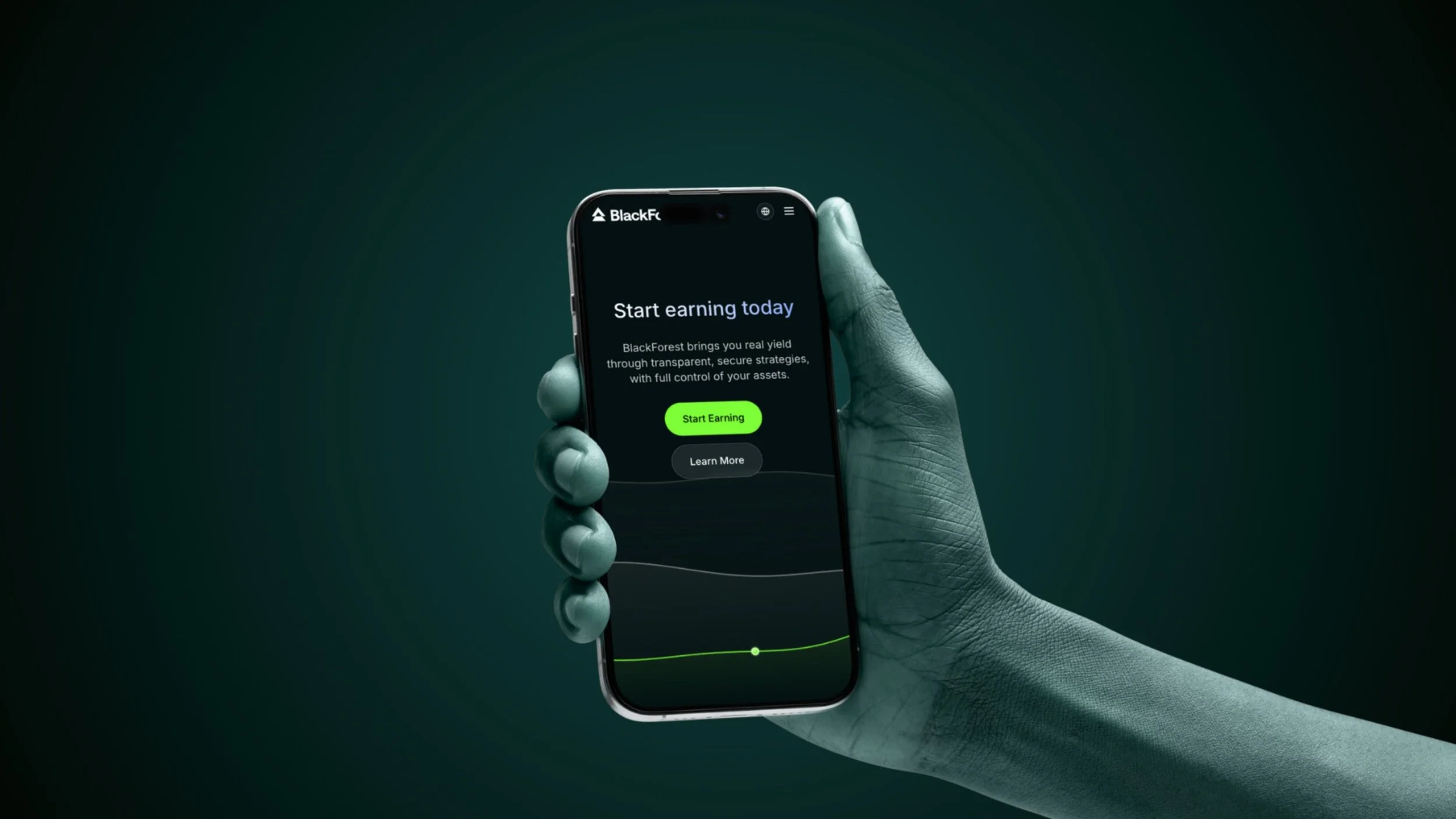
BlackForest
UI/UX strategy, interface design and frontend development for a next-generation decentralized finance platform.
Explore BlackForestShape Your City
A gamified citizen-engagement web application connected to a physical installation and real-time data visualization.
Explore Shape Your City
CAPABILITY 04
AI, Data & Intelligent Systems
We help organizations identify valuable AI opportunities and develop intelligent products, services, dashboards and decision-support systems grounded in real needs.
-
We help organizations move from general interest in AI to specific and testable applications.
We begin with the problem, workflow or opportunity—not with the technology alone.
AI strategy can include:
AI readiness assessment
Workflow and process analysis
AI opportunity identification
Use-case development
Value and feasibility assessment
Use-case prioritization
Data and system requirements
Human and organizational considerations
Risk and limitation identification
Proof-of-concept recommendations
AI roadmaps
The objective is to identify where AI could create meaningful operational, user, public or environmental value.
-
We help integrate AI into new or existing products, platforms and services.
Potential applications can include:
Generative and multimodal AI features
Intelligent recommendations
Personalized experiences
Adaptive interfaces
Predictive functionality
Pattern recognition and interpretation
Intelligent search and content discovery
AI-enabled connected products
Context-aware experiences
Real-time system optimization
We design the wider user experience around the AI capability so people can understand what the system is doing, interact with it effectively and use its outputs appropriately.
-
We design intelligent systems that help organizations access knowledge, support people and carry out increasingly complex tasks.
Potential applications can include:
Custom AI agents
Agentic workflows
Intelligent assistants
Enterprise knowledge systems
Research and analysis agents
Internal service and operations agents
Knowledge retrieval and synthesis
Tool and API integration
Human-in-the-loop workflows
Multi-agent system concepts
We can support organizations from identifying suitable Agentic AI use cases through prototyping, testing and implementation, while considering human oversight, governance and organizational adoption.
-
Computer vision allows physical environments and products to interpret visual information and respond to changing conditions.
Our work can explore:
Image and object recognition
Visual monitoring
Motion and presence detection
Expression and affect analysis
Manufacturing-error detection
Spatial interaction
Gesture-based experiences
Camera-enabled prototypes
Real-time system feedback
Adaptive physical environments
Computer-vision interface design
The Emoting City uses AI-driven expression analysis and sensing to explore how architecture could respond to emotional signals.
Tasni.ai investigates visual monitoring and real-time correction within robotic fabrication.
-
We design platforms that transform fragmented or complex data into accessible information and actionable insight.
Our capabilities include:
Data-platform strategy
User and decision-needs research
Monitoring platforms
Observatories
Role-based dashboards
Real-time data interfaces
KPI and metric frameworks
Decision-support tools
Data collection interfaces
API and data-source integration
Geospatial platforms
Knowledge and ecosystem platforms
Public-facing data experiences
We focus on the decisions and actions the platform needs to support—not only on displaying the available data.
-
We make complex information easier to explore, interpret and communicate.
Our data-visualization work can include:
Interactive charts and dashboards
Real-time visualization
Data storytelling
Geospatial and map-based visualization
Stakeholder and network visualization
Ecosystem maps
Comparative and temporal visualization
Public-facing visualizations
Exhibition-based data experiences
Strategic diagrams and system maps
Visualizations are designed around the audience, context and level of detail required.
-
Tasni.ai
A UAE-born software solution investigating AI-driven error detection, digital twins, real-time feedback and material-behavior mapping for robotic fabrication.
The Emoting City
An emotion-aware architecture research project combining affective computing, sensing and responsive kinetic systems.
Shape Your City
A public-engagement platform that translated participant input into a real-time visualization of collective urban priorities.
CAPABILITY 05
IoT, Connected Systems & Interactive Experiences
We connect sensors, devices, software, data and physical environments to create responsive products, smart systems and participatory experiences.
-
We help organizations define what a connected system should sense, communicate and enable.
IoT strategy and system design can include:
Opportunity and use-case definition
User and stakeholder research
Connected-system architecture
Device and sensor requirements
Data and feedback definition
Connectivity planning
Physical–digital user journeys
Dashboard and interface requirements
Prototype planning
Pilot-system definition
Our approach begins with the intended value and experience before selecting the technologies required to deliver it.
-
We develop prototypes that connect physical inputs and outputs to software, data and interfaces.
This can involve:
Sensor selection
Connected-device concepts
Hardware prototyping
Embedded interaction
Microcontroller-based systems
Data capture
Real-time communication
Responsive outputs
Camera and computer-vision integration
Companion dashboards
Functional IoT demonstrators
Prototype testing
Where required, we collaborate with specialist engineering partners to support further technical development.
-
Connected technologies can enable products and spaces to respond to people, data or changing environmental conditions.
We explore:
Smart and connected products
Wellness and healthcare devices
Responsive interiors
Smart-space prototypes
Adaptive environments
Real-time feedback systems
Ambient interfaces
Kinetic systems
Connected spatial experiences
AI and IoT integration
Monitoring and control interfaces
We coordinate the physical product or environment with its interface, data and system behavior.
-
We design installations that respond to participation, movement, data or environmental inputs.
Our capabilities include:
Installation strategy and concept development
Interaction design
Spatial user journeys
Sensor-based interaction
Computer-vision interaction
Physical interfaces
Responsive media
Light, sound and kinetic feedback
Real-time visualization
Interactive application development
Digital–physical prototyping
Technical coordination and testing
The technology is selected to support the intended experience rather than becoming the experience’s sole purpose.
-
We develop participatory experiences for museums, exhibitions, events, public spaces and urban contexts.
These experiences can help people:
Explore complex information
Contribute ideas or data
Participate in collective decision-making
Encounter research through interaction
Understand relationships and systems
See their input reflected in real time
Experience speculative futures
Engage with cultural or environmental questions
Projects can combine exhibition design, digital interfaces, sensing, visualization, storytelling and physical interaction.
-
Shape Your City
A physical–digital citizen-engagement experience combining a web application, public participation and live data visualization.
The Emoting City
A responsive architecture prototype using emotion analysis, ambient sensing and kinetic feedback.
(the air) between us
A more-than-human interactive installation combining IoT and AI integration.
CAPABILITY 06
Material Innovation & Sustainable Design
We investigate how local resources, byproducts and underused materials can become the basis of new composites, products and manufacturing processes.
-
We investigate the material possibilities emerging from a particular context, resource, industry or waste stream.
Research can include:
Local-resource mapping
Byproduct and waste-stream research
Material precedent research
Existing-material analysis
Application-opportunity identification
Environmental and contextual considerations
Stakeholder and supply-chain research
Material-to-product scenarios
Research-direction definition
Experimental planning
This helps determine which material opportunities are meaningful and which require further testing.
-
We develop and test material formulations through iterative, documented experimentation.
Our work can include:
Bio-based material exploration
Biodegradable material research
Natural binders and fibers
Composite formulation
Ingredient-ratio testing
Sample production
Forming and curing studies
Material-performance observation
Application testing
Formulation refinement
Material documentation
The required testing process is tailored to the material and intended application.
-
We are particularly interested in resources that are abundant or underused within the UAE and the wider region.
This can include:
Agricultural byproducts
Marine byproducts
Desalination byproducts
Construction and manufacturing waste
Desert resources
Organic fibers
Locally available minerals
Industrial side streams
Material-reuse opportunities
The aim is to investigate how local resources could reduce dependency, create new value and support more contextually appropriate products or production systems.
-
Material development requires repeated experimentation.
We plan, conduct and document material trials to understand how changes in formulation and process affect the resulting sample.
Testing and prototyping can include:
Formulation matrices
Comparative samples
Process-variable testing
Moulding and forming trials
Drying and curing studies
Fabrication tests
Surface and finish studies
Application prototypes
Failure documentation
Iterative refinement
Sample libraries
Specialized laboratory testing can be coordinated with appropriate external partners when required.
-
A new material becomes meaningful when its potential applications are explored.
We can translate material research into:
Product concepts
Fashion and accessory applications
Interior and architectural components
Packaging concepts
Fabrication materials
Exhibition samples
Demonstration objects
Circular-service concepts
Application prototypes
Future manufacturing scenarios
This helps connect experimental material research to practical, cultural and commercial opportunities.
-
MRG
A biodegradable composite developed from fish scales and desalination salt through more than 90 iterative material trials.
Åthar
Ongoing research into desert-sand-based additive manufacturing, local waste streams and carbon-capturing fabrication processes.
CAPABILITY 07
Advanced Manufacturing & Robotic Fabrication
We explore how computational design, digital fabrication, robotics, sensors and AI can make manufacturing more adaptive, precise and responsive to material behavior.
-
We help organizations investigate how digital fabrication can support a product, material, architectural or manufacturing opportunity.
This can include:
Fabrication-process research
Technology and equipment assessment
Digital workflow definition
Material and process matching
Prototype-production planning
Process constraints and opportunities
Design-for-fabrication studies
Experimental workflow development
Pilot-system planning
The objective is to select and develop a process appropriate to the material, geometry, performance and intended scale.
-
We develop and investigate additive-manufacturing workflows for standard and experimental materials.
Our work can include:
Additive-manufacturing research
Material-deposition strategies
Toolpath development
Extrusion testing
Parameter exploration
Layer and bead studies
Geometry development
Print monitoring
Sample production
Process documentation
Iterative prototype refinement
Experimental materials often require a close relationship between material formulation, toolpath design and machine behavior.
-
Robotic fabrication expands the range of movements, scales and processes available for experimental production.
Our capabilities can include:
Robotic workflow research
Robotic toolpath planning
Computational geometry development
Custom end-effector concepts
Material-deposition studies
Sensor integration
Machine-vision integration
Robotic prototype production
Fabrication monitoring
Process testing and documentation
We develop robotic fabrication projects in collaboration with relevant prototyping facilities and technical partners.
-
Computational design enables geometry, toolpaths and production logic to respond to defined parameters and material constraints.
Our work can include:
Parametric design systems
Generative geometry
Computational modelling
Rule-based design
Toolpath generation
Design-to-fabrication workflows
Material-informed geometry
Iterative design automation
Process visualization
Digital simulation
These methods can support customization, fabrication efficiency and closer coordination between design and production.
-
We explore how manufacturing systems can sense deviations, interpret process data and respond in real time.
This can include:
Digital-twin concepts
Computer-vision monitoring
AI-assisted error detection
Real-time feedback
Process-data visualization
Material-behavior mapping
Parameter recommendations
Adaptive toolpaths
Fabrication dashboards
Human oversight interfaces
Tasni.ai is a UAE-born software solution exploring real-time monitoring, error correction, digital twins, material-behavior mapping and advanced toolpath visualization for robotic fabrication.
CAPABILITY 08
Public-Sector Innovation & Capability Building
We help government entities and institutions understand complex systems, engage stakeholders and translate strategic priorities into actionable programs, platforms and prototypes.
-
We support government entities exploring new services, platforms, technologies and models of collaboration.
Our work can include:
Strategic and contextual research
Innovation-opportunity definition
Stakeholder engagement
Systems and ecosystem mapping
Emerging-technology exploration
Future scenarios
Service and platform concepts
Proofs of concept
Pilot development
Implementation roadmaps
Our design-led approach helps make strategic ambitions tangible enough to evaluate, communicate and test.
Explore Government Innovation → -
We investigate how people experience public services and how those services could become more accessible, coordinated and responsive.
This can include:
Citizen and stakeholder research
Service journeys
Service blueprints
Pain-point and gap identification
Information architecture
Digital-service concepts
Participatory service design
Interface prototyping
Usability testing
Pilot recommendations
The aim is to connect institutional priorities to the lived experience of the people a service is intended to support.
-
We design tools that enable people to understand, contribute to and influence public initiatives.
Potential formats include:
Citizen-engagement platforms
Participatory planning tools
Public consultation interfaces
Gamified participation
Interactive maps
Real-time contribution visualization
Exhibition-based engagement
Community idea collection
Feedback and prioritization tools
Hybrid physical–digital experiences
Shape Your City transformed public participation around the Dubai 2040 Master Plan into an accessible digital–physical experience and live collective visualization.
-
Public-sector challenges often involve multiple entities, programs, mandates and stakeholder groups.
We make these relationships visible through:
Stakeholder mapping
Institutional ecosystem mapping
Initiative mapping
Mandate and role mapping
Platform and service mapping
Data-flow mapping
Participation-pathway mapping
Gap and duplication analysis
Synergy identification
Strategic visualization
Coordination frameworks
These tools can support shared understanding, cross-entity coordination and more informed decision-making.
-
We design platforms that help institutions monitor changing conditions, interpret evidence and coordinate action.
This can include:
National or sector observatories
Readiness platforms
Monitoring dashboards
Knowledge platforms
Data visualization
Geospatial interfaces
Role-based views
Stakeholder and network visualization
Decision-support tools
Reporting and insight interfaces
We coordinate research, data structure, user experience and interface development around the decisions the platform needs to support.
-
We design and facilitate collaborative programs around real organizational priorities.
Programs may focus on:
Design thinking
Design research
Systems thinking
Futures and scenarios
AI opportunity discovery
AI capability activation
Material innovation
Sustainability and circular design
Rapid prototyping
Digital fabrication
Product and service innovation
Cross-disciplinary collaboration
We can develop a focused executive workshop, an internal sprint, a multi-week program or a wider innovation challenge involving participants, mentors, researchers and external partners.
HOW WE WORK
An integrated path from exploration to execution
-
We begin by understanding the context, the people involved and the change you want to create.
Through research, workshops, interviews, mapping and technical exploration, we identify meaningful opportunities and determine which assumptions need to be tested.
Typical outputs can include:
Research findings and opportunity areas
Stakeholder and ecosystem maps
Future scenarios
Strategic frameworks
Prioritized concepts
Technology recommendations
• • An innovation or R&D roadmap
-
We transform the selected direction into something tangible.
Depending on the challenge, this may be a digital prototype, physical product, material sample, interface, installation, connected system, dashboard or functional proof of concept.
Typical outputs can include:
Concept designs
Wireframes and interactive prototypes
3D models and technical designs
Material samples
Hardware and software prototypes
Data and dashboard prototypes
• • Integrated demonstrators
-
We test, refine and prepare the project for its next stage.
This may mean a validated prototype, public pilot, technical package, exhibition-ready installation or clear recommendation about whether and how to proceed.
Typical outputs can include:
Testing and validation findings
Refined prototypes
Implementation recommendations
Technical documentation
Roadmaps and specifications
Pilot-ready solutions
Stakeholder, partner or investor presentations
You can work with IBDÅ across the full journey or engage us for one clearly defined phase.
WAYS TO WORK WITH US
Flexible collaboration shaped around your challenge
-
For organizations that need one multidisciplinary partner to lead a project from research and strategy through design, prototyping, testing and delivery.
We structure the process, assemble the appropriate expertise and coordinate the different workstreams required to move the project forward.
-
For organizations that need to investigate an opportunity, technology, material or concept within a defined period.
An R&D sprint can clarify feasibility, surface risks, identify possible directions and determine whether a larger project is justified.
-
For teams with an existing idea that needs to become tangible, testable and demonstrable.
Depending on the project, we can develop a digital, physical, material or hybrid proof of concept to gather evidence, engage stakeholders or prepare for further development.
-
For internal teams that need additional expertise in strategy, research, UX/UI, software, product design, AI, data, IoT, materials, fabrication or interactive experiences.
We can lead a defined workstream while collaborating with your existing team and partners.
-
For institutions seeking to activate internal capabilities, engage stakeholders or generate and develop ideas collaboratively.
Programs can range from a focused workshop or design sprint to a multi-week challenge or structured innovation initiative.
-
We help government entities and public institutions explore new services, technologies and models of collaboration.
Our work can include public-service design, citizen engagement, participatory platforms, ecosystem and initiative mapping, observatories, decision-support systems, strategic visualization and innovation programs.
-
We develop products, platforms and integrated experiences for healthcare, wellness and longevity.
Our capabilities can include user and stakeholder research, product and industrial design, connected systems, UX/UI, data visualization, AI integration and physical–digital prototyping.
-
We investigate how AI, robotics, sensors, digital twins and real-time data can support more adaptive and efficient manufacturing processes.
Our work spans robotic fabrication, additive manufacturing, process monitoring, computer vision, toolpath visualization and intelligent manufacturing interfaces.
-
We explore how materials, computation, sensing and interaction can transform buildings, spaces and construction processes.
Our work may include responsive architecture, computational design, robotic fabrication, sustainable materials, interactive environments and digital–physical prototypes.
-
We design participatory platforms, interactive maps, urban interfaces and data experiences that help people understand and contribute to the future of their cities.
Our capabilities include citizen engagement, participatory planning, real-time data visualization, urban research, responsive environments and smart-city prototyping.
-
We collaborate with universities, research centers and learning institutions on applied research, experimental development and innovation programs.
Our work can include research-led prototypes, multidisciplinary workshops, design challenges, emerging-technology exploration, capability building and collaboration between academia and industry.
-
We create interactive installations, exhibitions and participatory experiences that invite audiences to explore, contribute and engage.
Our work can combine physical design, digital interfaces, sensors, AI, real-time data, responsive media, visualization and storytelling.
-
We investigate locally grounded approaches to material innovation, circular design and resource-efficient production.
Our work includes biomaterials, experimental composites, waste-stream research, sustainable product concepts, local-material applications and lower-impact manufacturing processes.
-
We support innovation across materials, products, customer experiences and operational systems for fashion and retail.
Our capabilities can include sustainable-material research, circular-design strategies, interactive retail experiences, digital product development, data platforms, product tracking and innovation workshops.
-
We help technology companies and startups define, design and develop digital products, platforms and emerging-technology experiences.
Our work can include product strategy, UX/UI, websites and applications, software development, AI integration, connected systems and functional prototypes.
-
[DROPDOWN TITLE: Data & Governance]
We design systems that make complex information, institutional relationships and strategic priorities more visible and actionable.
Our capabilities include dashboards, observatories, knowledge platforms, ecosystem mapping, stakeholder networks, data visualization and decision-support tools.
-
We design accessible interfaces and digital experiences for technically complex financial and decentralized systems.
Our work can include UX strategy, user flows, platform architecture, interface design, design systems, data-rich experiences and frontend development.
WORKING ACROSS SECTORS
Cross-disciplinary expertise for complex challenges
We work across sectors, bringing together design, research and technology in response to different organizational, societal and industrial needs.
Cross-sector work is central to our model. Many meaningful innovations emerge when methods, technologies and insights from one field are thoughtfully translated into another.
BASED IN DUBAI.
WORKING ACROSS THE REGION AND BEYOND.
Locally grounded. Internationally connected.
IBDÅ is an R&D and innovation studio based at in5 Design in Dubai Design District, UAE.
From Dubai, our multidisciplinary team collaborates with companies, government entities, institutions and partners across the UAE, Saudi Arabia, the GCC, the wider Middle East and internationally.
We believe meaningful innovation must respond to its context. This may mean designing for local climates and resources, developing bilingual Arabic and English interfaces, engaging regional stakeholders or aligning solutions with specific cultural, organizational and national priorities.
Our work combines this local understanding with global research, emerging technologies and international design and development practices.
WHY IBDÅ?
More than ideas. More than execution.
-
Strategy, research, design, technology and prototyping are coordinated within one process.
-
We do not stop at insights and recommendations. We use research to inform concepts, experiments and tangible outcomes.
-
We work across software, hardware, data, materials, products, interfaces and environments—and connect them when the project requires it.
-
Prototypes and proofs of concept make assumptions visible before an organization commits to full-scale implementation.
-
We use AI, IoT, data, robotics and emerging technologies where they contribute to meaningful user, organizational, societal or environmental outcomes.
-
We develop responses suited to the UAE and the region while drawing on global expertise, research and technological developments.
-
We can lead an entire project, strengthen an internal team, collaborate with external specialists or focus on one critical stage.
-
An R&D and innovation consultancy helps an organization investigate opportunities, develop and test ideas, apply emerging technologies and reduce uncertainty before implementation.
This may involve strategic research, design, engineering, software development, material experimentation, prototyping, user testing and pilot development.
IBDÅ brings these activities together within a multidisciplinary, design-led process.
-
Yes.
Many projects begin with an ambition, opportunity, technology or unresolved problem rather than a completed brief.
We can help frame the challenge, research the context, identify possible directions and determine what should be investigated or tested first.
-
Yes.
We develop digital, physical, material and hybrid proofs of concept. Depending on the project, this may include UX/UI, software, AI, connected hardware, sensors, industrial design, material samples, digital fabrication or an integrated demonstrator.
-
Yes.
IBDÅ is based in Dubai and provides product research, industrial design, prototyping, interface design and technology-integration services for companies and institutions in the UAE, the region and internationally.
-
Yes, where AI supports a clear purpose.
We can assess the current product or workflow, identify relevant AI opportunities, prioritize potential use cases and develop an interface or proof of concept to test the proposed application.
-
Yes.
We design and develop websites, applications, dashboards, data platforms, internal tools and connected digital experiences.
We can support product strategy, user research, UX/UI design, prototyping, frontend development, full-stack development and system integration.
-
Yes.
We can assess an existing platform or workflow, identify gaps and usability problems, and redesign the experience to make information easier to enter, understand and act upon.
Where required, we can also support development and integration with existing systems and data sources.
-
Yes.
Our capabilities are relevant to government innovation, citizen engagement, public-service design, participatory planning, ecosystem mapping, strategic visualization, governance platforms and decision-support systems.
-
Yes.
We conduct applied material research, iterative formulation trials, local-resource and waste-stream exploration, sustainable-design research and prototype development.
-
Yes.
We can help define, design and prototype connected systems involving sensors, embedded technologies, data pipelines, interfaces, dashboards, responsive behavior and AI integration.
-
Yes.
We design physical–digital experiences for public spaces, exhibitions, cultural institutions and events using sensors, computer vision, data visualization, responsive media, gamification and custom applications.
-
Yes.
We design and facilitate workshops, sprints, innovation challenges, training programs and collaborative R&D initiatives around specific organizational priorities.
-
Yes.
We work from Dubai with clients and partners across the UAE, Saudi Arabia, the GCC, the wider Middle East and internationally.
Projects can combine remote collaboration with in-person research, workshops, prototyping, fabrication or installation where required.
-
Start by sharing the challenge, opportunity or idea you are exploring. It does not need to be fully defined.
We will discuss the context, clarify the intended outcome and recommend an appropriate starting point—whether that is a workshop, research sprint, strategy phase, proof of concept, prototype or end-to-end development project.
FREQUENTLY ASKED QUESTIONS
Working with IBDÅ
Have an idea, challenge or opportunity?
You may be exploring an emerging technology, improving an existing service, developing a new product, testing a material, building a data platform or looking for a better way to engage people.
You do not need to arrive with all the answers.
Bring us the ambition, the problem or the possibility. We will help you determine what to investigate, what to build and how to move it forward.
Let’s innovate, build and deliver what comes next.