
Advanced Manufacturing & Robotic Fabrication
What if the way we make could evolve with what we learn?
A new material can demand a different tool. A new geometry can expose the limits of a familiar process. Feedback from fabrication can change the design itself.
At IBDÅ, we investigate these relationships together. Our work connects computational design, material experimentation, custom fabrication tools and software to develop and test new ways of making.
-
We begin with the application and the uncertainty that matters: how a material can be deposited, how a tool should move, how a process can be observed, or how a digital model translates into physical behavior. This gives the experiment a clear purpose and makes its results easier to assess.
-
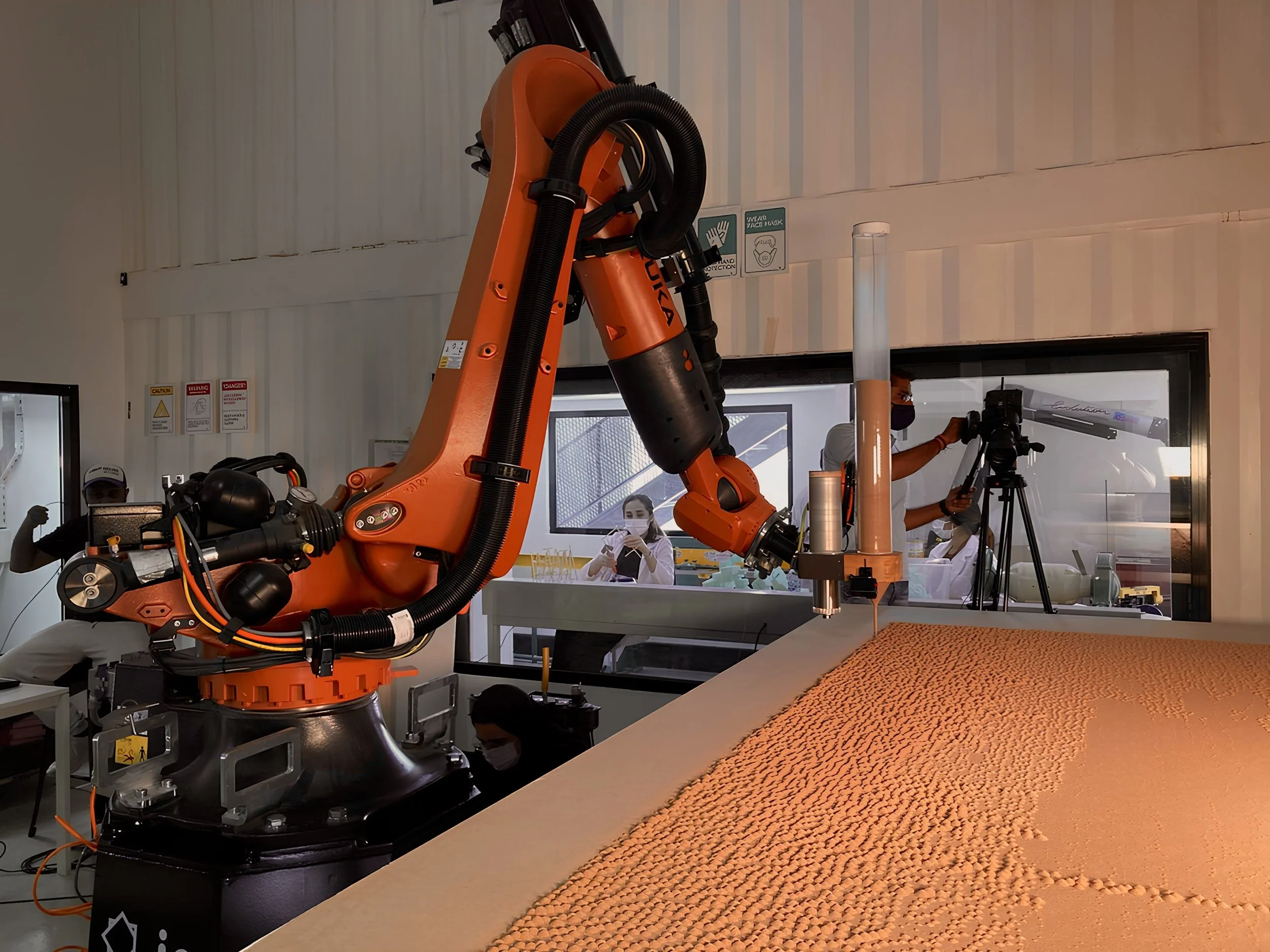
A robotic arm is part of a wider fabrication system. The end-effector, material delivery, movement sequence, calibration and digital controls all influence the result. We explore these elements through prototypes, documenting how changes affect the physical output.
-
Simulation and parametric modeling help us explore alternatives. Making reveals conditions that a model may not fully capture. We use the relationship between design intent and observed behavior to refine geometry, toolpaths and process assumptions.
-
Monitoring becomes valuable when it helps identify a deviation and informs an appropriate response. Depending on the project, we explore sensing, process data and software interfaces that help people understand what is happening during fabrication. Automated adjustment is developed and evaluated within a defined scope.
Our approach
Selected work
-
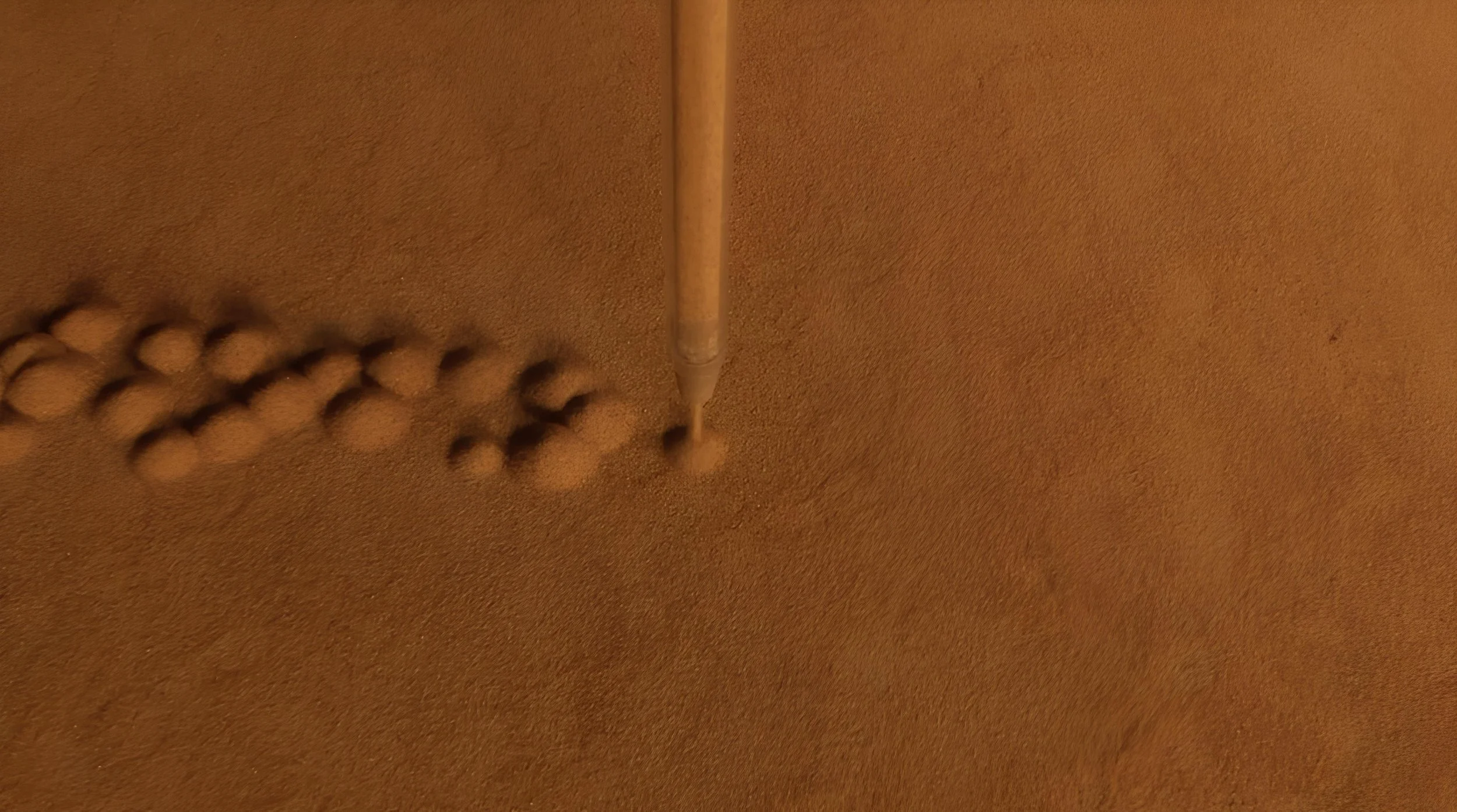
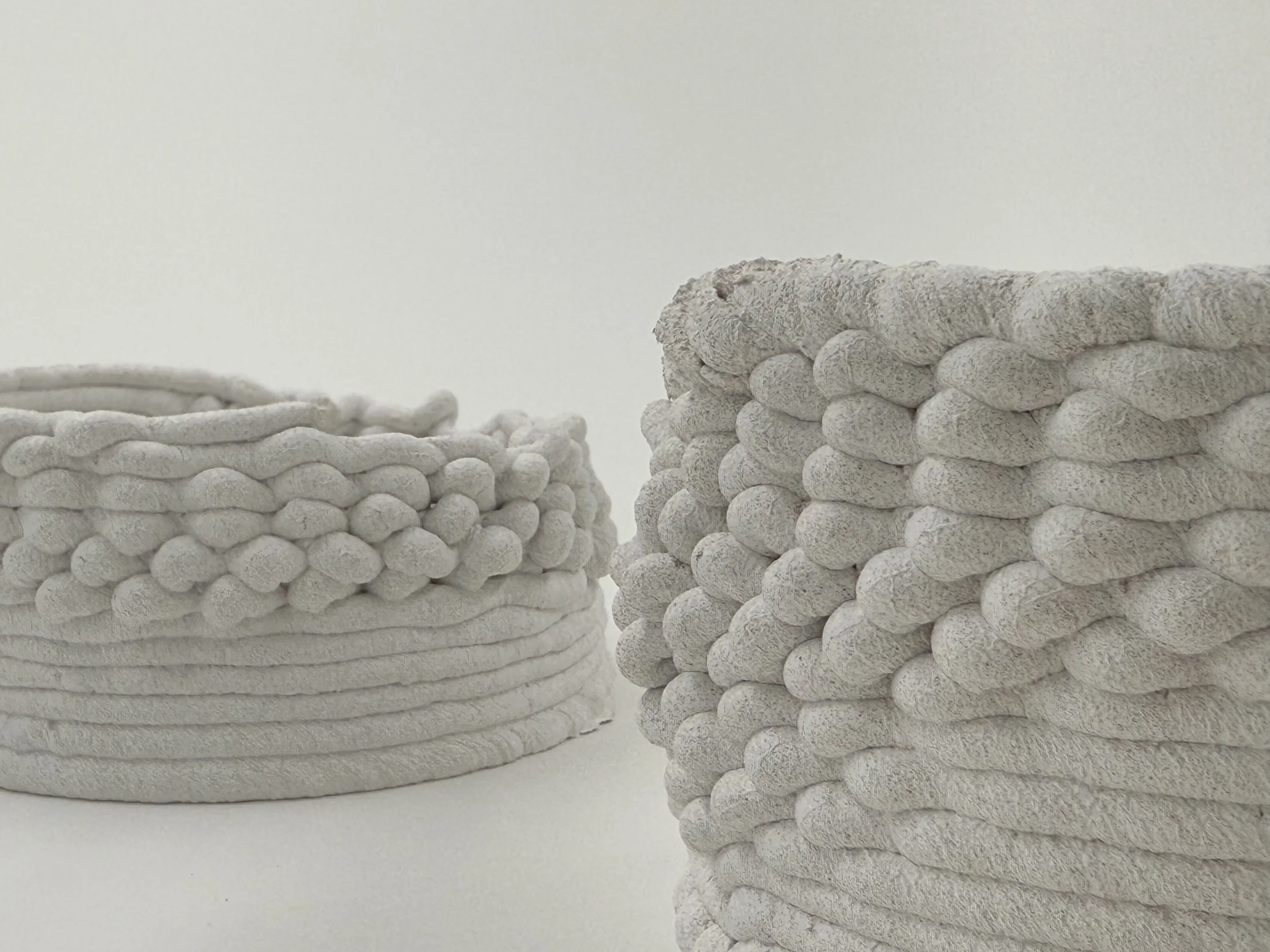
Ongoing research into desert-sand materials and robotic fabrication. The project brings material formulation, deposition and process feedback into a shared development process.
-
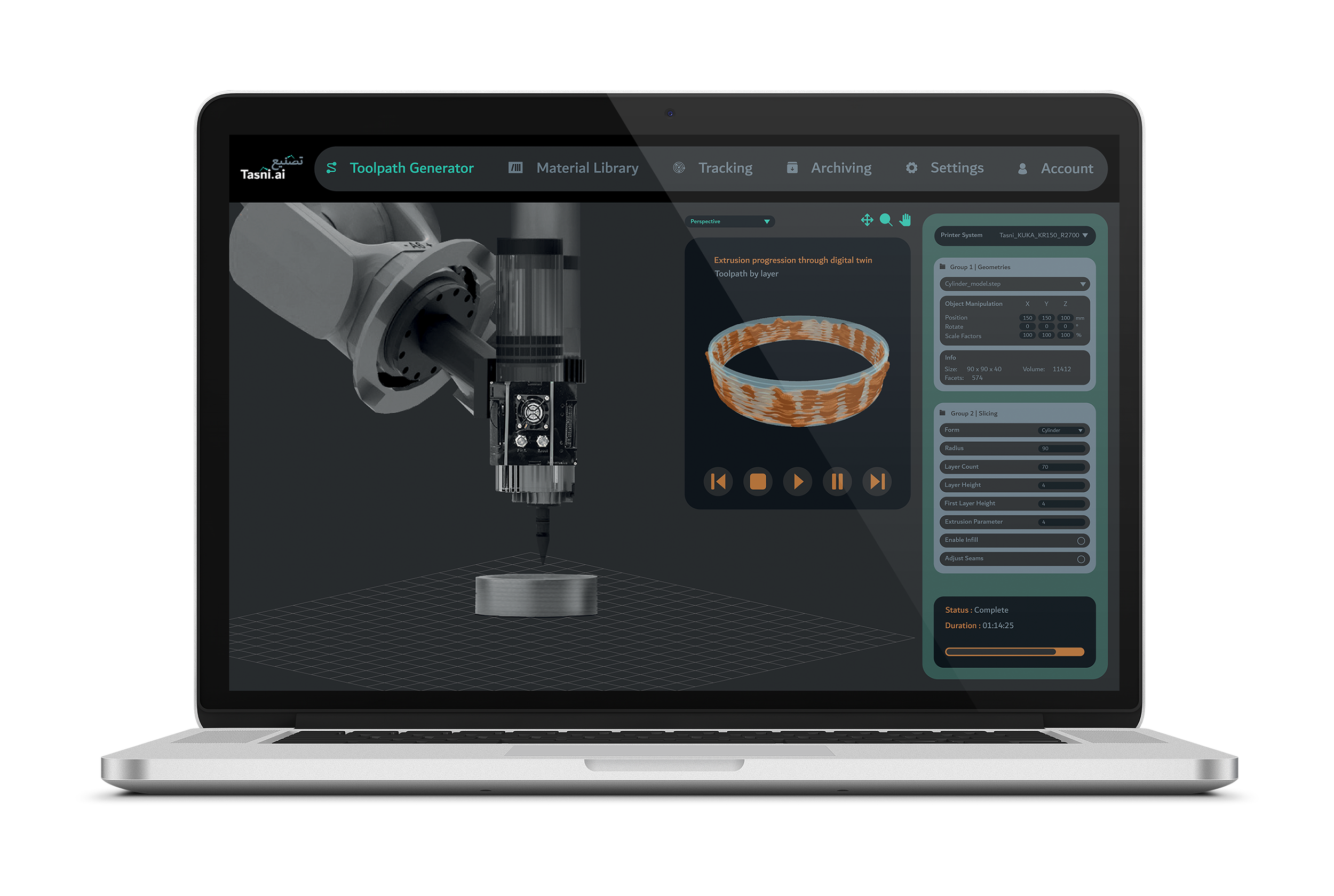
A proof-of-concept system combining a robotic arm, custom sand deposition tool, external electronics and parametric software. It explores how granular material can be controlled through a designed fabrication process.
-
An IBDÅ venture exploring AI-supported monitoring, material behavior and feedback within manufacturing workflows.
What we can explore together
A custom deposition tool. A material that needs a fabrication process. A robotic demonstrator. An interface for understanding manufacturing data. An early workflow that needs physical testing.
We can begin with a focused feasibility study or prototype and define further development around the evidence produced. Explore R&D & Prototyping.
Related expertise: Material Innovation · AI Integration
Questions worth asking
-
A prototype establishes evidence within specific conditions. Production readiness may require further reliability testing, safety engineering, process control and specialist manufacturing input.
-
The first experiment should address the key uncertainty. Depending on the question, a material trial, simple tool or digital study may be the most useful starting point.
•
computational design
•
material experimentation
•
custom fabrication tools
•
robotic fabrication
•
toolpaths
•
sensing
•
process data
•
physical testing
• computational design • material experimentation • custom fabrication tools • robotic fabrication • toolpaths • sensing • process data • physical testing