
OUR SERVICES
Smart Products & IoT
What could your next physical product make possible?
From product idea to a working connected system.
We help organizations and founders develop physical products that sense, respond and connect.
Our work brings together user research, industrial design, sensors, electronics integration, embedded interactions and companion software. We develop the relationship between the device, its user and the environment in which it operates.
From smart wearables and connected equipment to custom sensing systems, we can lead the journey through development, testing and implementation, coordinating the specialist expertise each product needs.
WHAT WE HELP YOU DEVELOP
Start with what the product needs to do in the world.
-
Explore a product that measures a condition, supports an activity or gives useful feedback. Develop its physical form and interaction alongside the sensing and connections that enable it.
Potential briefs: a wearable concept, sensor-based accessory, connected wellness device or new function within an existing product.
Key questions: What should it detect? How is it worn or handled? What feedback is useful? What affects comfort, power demand and reliable operation?
-
Make physical equipment easier to understand, monitor and control. Connect controls, indicators and companion interfaces with the equipment's behavior.
Potential briefs: an operator interface, equipment dashboard, connected control system or digital extension to an existing machine.
Key questions: What needs local control? What can be accessed remotely? How should operators recognize a fault and recover?
-
Investigate how a physical condition can be measured and communicated in a useful way. Connect sensor placement, data capture and interpretation with the decisions the information should support.
Potential briefs: environmental sensing, condition monitoring, instrumented prototypes and feedback devices.
Key questions: Which measurement is meaningful? Where should sensing happen? How will calibration, environmental conditions and connectivity affect the result?
-
We design custom tools and sensor feedback for a fabrication process, so it can be monitored and adjusted.
Potential briefs: a custom end-effector concept, process-monitoring prototype, sensor-feedback loop or fabrication demonstrator combining hardware and software.
Key questions: What varies during making? What can be observed or measured? Which adjustments belong to the system and which require an operator?
INTEGRATED PRODUCT DEVELOPMENT
Resolve the physical and digital requirements together.
Choices about shape, sensing, power, communication and software affect one another. We make those dependencies visible and develop the product around its intended use.
Form and use — Ergonomics, handling, mounting, component layout, controls and physical feedback.
Sensing — Sensor options, placement, data capture and evaluation under representative conditions.
Electronics and embedded behavior — Microcontroller-based prototypes, component integration, control logic and device responses.
Power and connectivity — Operating needs, component demands, communication options and behavior when connections are interrupted.
Companion software — Setup flows, monitoring, controls, alerts, device data and connections to agreed platforms.
Materials and assembly — Enclosures, material choices, fastening, access, fabrication and design-for-assembly considerations.
Operation over time — Maintenance access, component replacement, updates, repair and documented responsibilities.
Specialist electronics, firmware, mechanical engineering and manufacturing input are coordinated where required by the product and its intended scale.
PROTOTYPING AND TESTING
A working device needs evidence from physical use.
We select prototypes according to the question that needs an answer. Prototypes are produced at our lab at in5 Design in Dubai Design District and with fabrication and engineering partners where required.
Form and ergonomic models
Check scale, reach, fit, handling and placement before committing to a detailed build.
Sensor and electronics experiments
Investigate whether the selected components can capture the required information and produce a useful response.
Integrated device prototypes
Connect the physical assembly, control logic and interface so the complete interaction can be tried.
Field or pilot units
Evaluate the product with representative users and conditions, then refine the design and operating approach.
Depending on the brief, evaluation can include:
Measurement accuracy, repeatability and response time.
Communication reliability and recovery after interruption.
Power use and operating duration.
Usability, comfort and clarity of feedback.
Physical durability and environmental exposure.
Assembly, servicing and component replacement.
The test plan defines the conditions, criteria and specialist validation needed for the intended application.
FROM DEVELOPMENT TO USE
Coordinate the build and the next stage of delivery.
Define the device and system
Research the user and context, establish product requirements and map the relationships between components, sensing, controls and software. Identify the critical technical uncertainties.
Build and integrate
Develop physical design, component integration and companion interfaces together. Use experiments and integrated prototypes to refine the product and document the decisions.
Validate and implement
Prepare an agreed pilot or implementation, coordinate further engineering and production requirements, and establish operating ownership. Define installation, handover, maintenance and continued development around the project's needs.
Deliverables can include CAD models, drawings, component specifications, prototype assemblies, software and control files, test findings and production or pilot documentation.
Where certification or specialist production work is required, its responsibilities and sequence are established within the delivery plan.
SELECTED WORK
Physical systems developed across disciplines.
Quantum Qi — Product, interface and connected technology
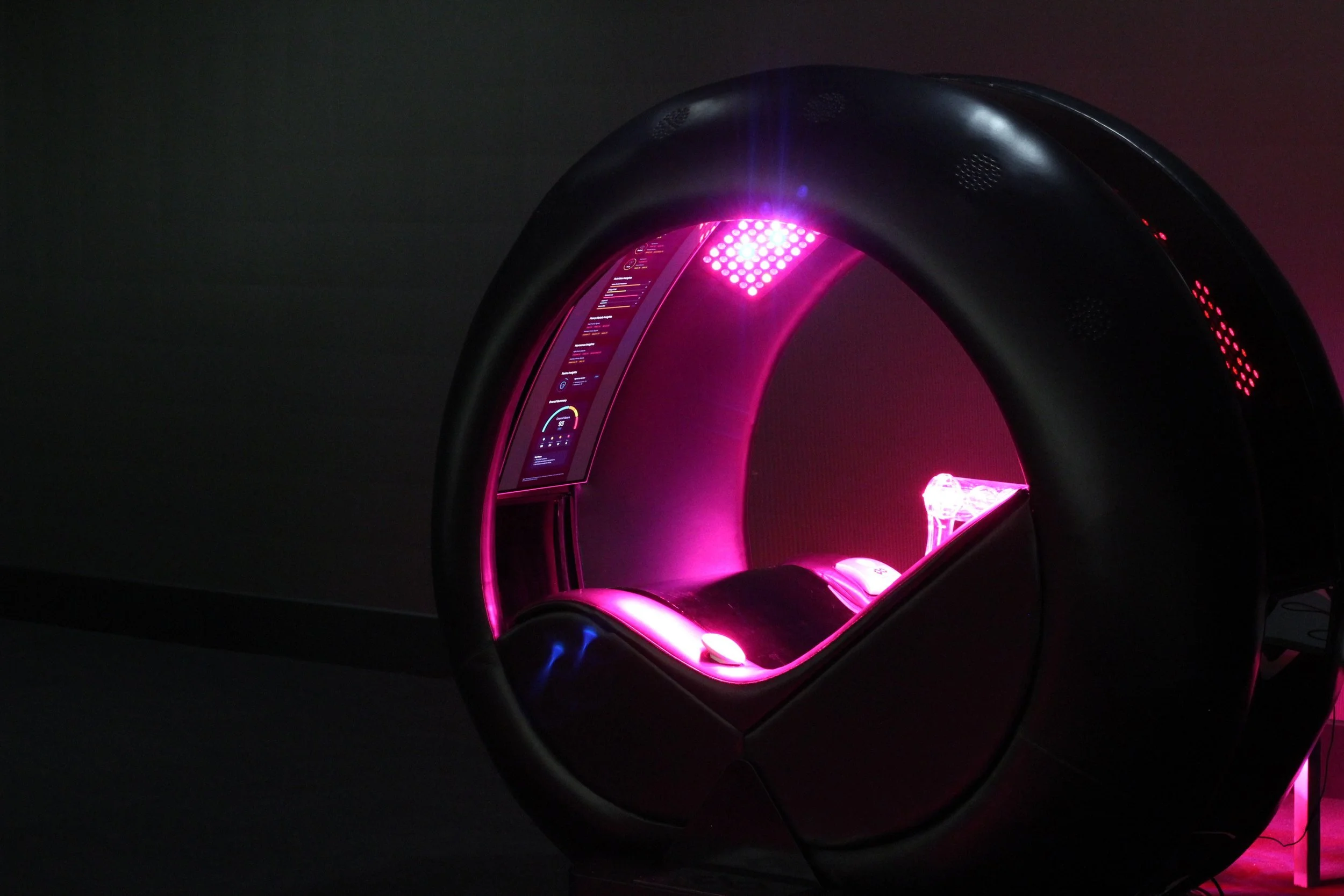
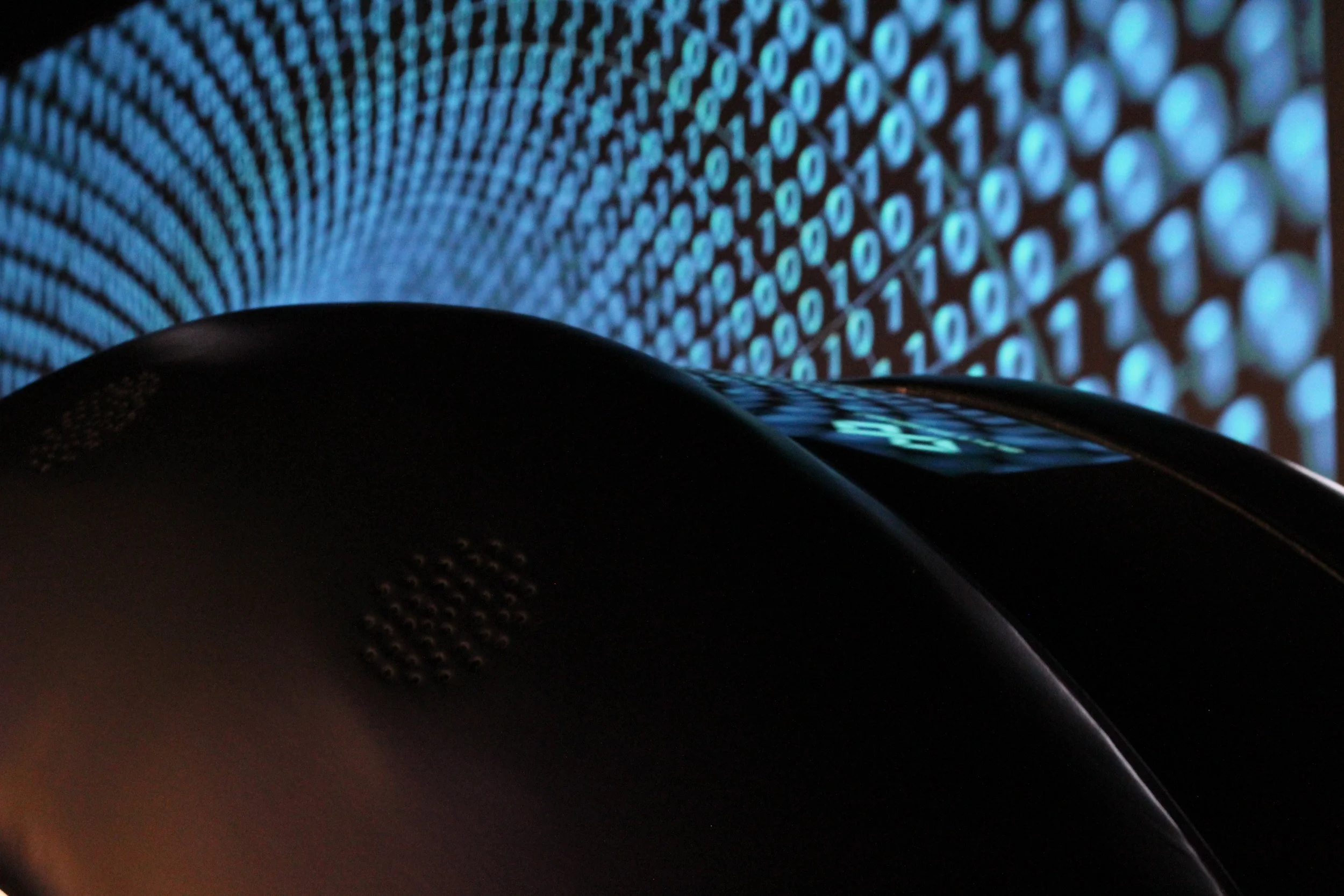
A collaborative wellness-system project bringing industrial and spatial design together with UX/UI, frontend development and connected technologies.
Developed with the Longevity Wellness Hub team, Quantum Qi demonstrates the coordination of physical form, interface and system behavior. It is patent pending in the United States and the United Arab Emirates and has been exhibited at Museum of the Future.
Relevant capabilities: industrial design, physical–digital integration, UX/UI, frontend development and prototyping.
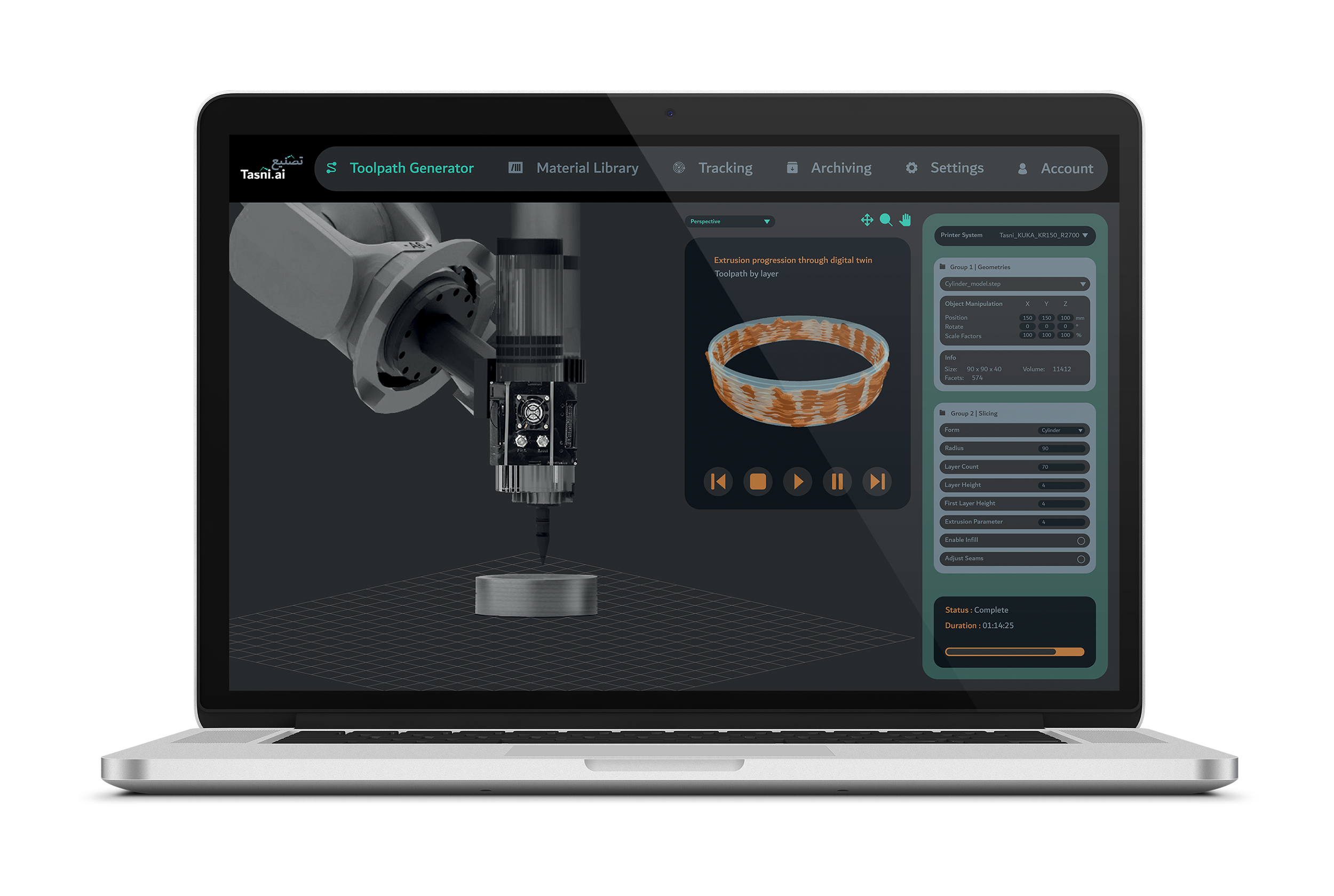
Tasni.ai — Connecting software with a physical process
An IBDÅ spin-off exploring software, sensor feedback and process information in robotic fabrication. Its research connects the behavior of a making process with the information needed to understand and adjust it.
Relevant capabilities: fabrication research, sensor feedback, software and process visualization.
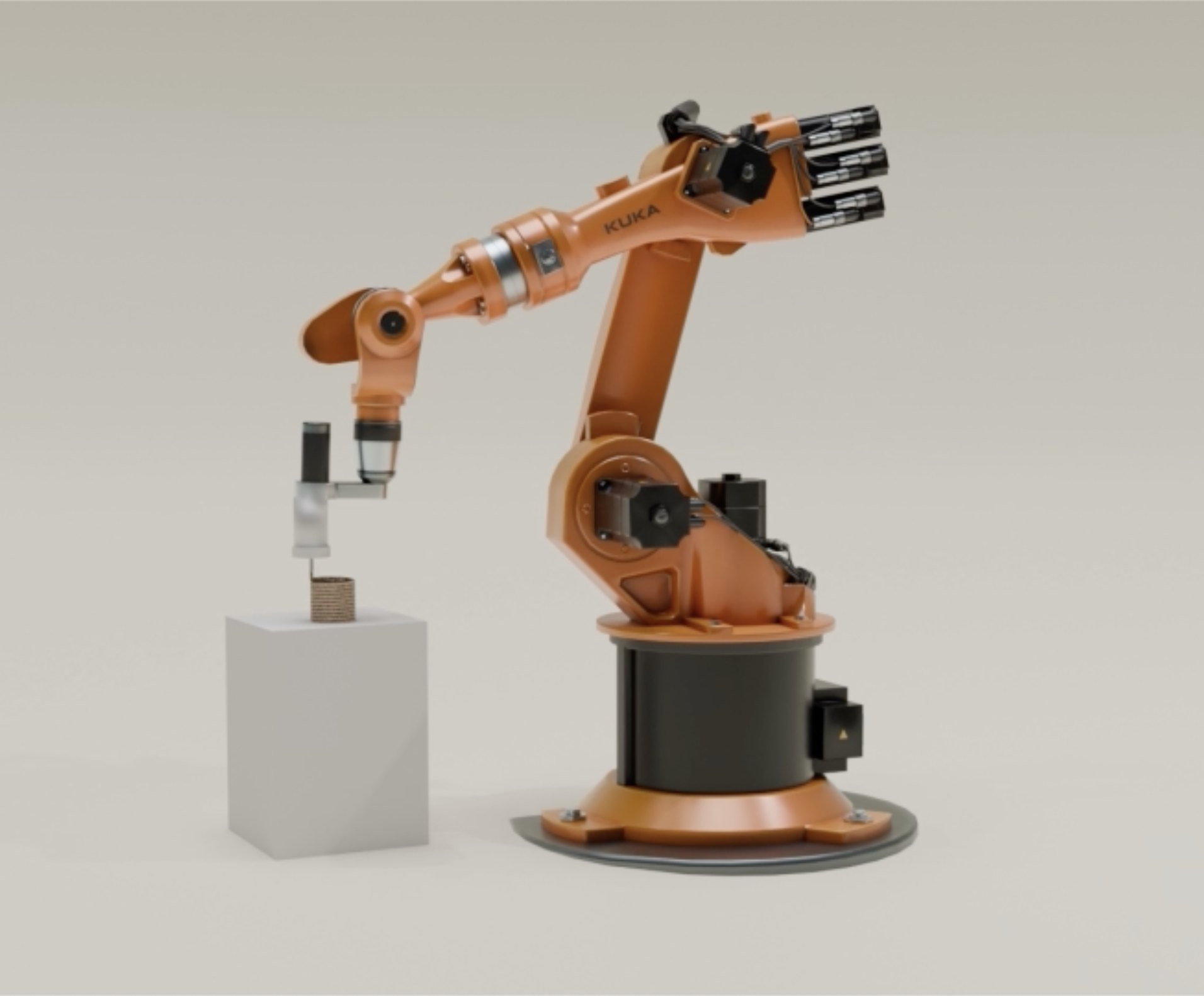
One Grain at a Time — A custom tool for robotic fabrication
A proof-of-concept robotic sand depositor: a KUKA robotic arm with a custom sand deposition tool, controlled by external electronics and parametric software. A working prototype was built and tested during Dubai Design Week 2021, in collaboration with DIDI and in5 Design.
Relevant capabilities: custom tooling, electronics, parametric software and robotic fabrication.
WAYS TO BEGIN
Bring the idea, the device or the technical question.
IBDÅ can act as your external product-development team or collaborate with your engineers, suppliers and manufacturing partners. For a first proof of concept or a broader experimental brief, see R&D & Prototyping. Where the question is mainly about a material or formulation, see Material Innovation.
-
Begin with product definition and feasibility: identify the user, required functions, constraints and first experiment.
-
Review what already works, investigate the gaps and develop a practical route to the next build.
-
Coordinate research, product design, hardware and software integration, testing and implementation through agreed stages.
-
Yes. We coordinate physical design, component integration, embedded interactions and companion software around shared product requirements. Specialist engineering is included where the scope requires it.
-
Yes. We can investigate the intended use, physical fit and interaction, sensing requirements and connected prototype. Testing, regulatory and specialist requirements depend on what the wearable is intended to do. Products intended for medical or diagnostic use are scoped with specialist partners.
-
Yes. We can review the device, documentation and current limitations, then refine the physical design, integration, interface or testing approach.
-
No. A connected product may need only sensing, communication and well-defined control. Where AI could help interpret information or influence behavior, we evaluate its role and how its outputs will be checked.
-
Yes. We can continue into pilot development, integration and implementation, coordinating further engineering, manufacturing and specialist testing as required. The proposal defines delivery responsibilities, outputs and ongoing support.
-
No. We can assemble and coordinate the relevant disciplines around your brief. If you have an existing team, we can contribute to specific stages or work alongside it throughout development.
-
Explore our Digital Products & Platforms work for software-led briefs. This page covers projects in which the physical device, sensing or equipment is a central development requirement.
FAQ
Questions you may have
•
industrial design
•
sensors
•
electronics integration
•
embedded interaction
•
companion software
•
prototyping
•
testing
•
implementation
• industrial design • sensors • electronics integration • embedded interaction • companion software • prototyping • testing • implementation
START A PROJECT
What needs to happen beyond the screen?
Bring us a smart-product idea, a sensing challenge or a device ready for its next stage.