
We help organizations investigate materials, processes and products shaped by environmental questions and the resources around them.
Our work connects applied research, material experimentation, design and fabrication. We explore biomaterials, waste streams, local resources and new production methods, then develop samples and prototypes that make their potential testable.
Bring us a material challenge, an underused resource or an idea for a different way of making.
OUR SERVICES
Material Innovation & Circular R&D
What could your next material make possible?
From local resources to new material possibilities.
OPPORTUNITIES
What if the next opportunity is already around you?
An industrial byproduct. A locally abundant resource. A material that performs differently. A product whose next life could be designed from the beginning.
We help turn these starting points into focused research questions and practical experiments.
-
Investigate how the properties and availability of a local resource could inform a material, component or product.
Potential briefs: desert-sand applications, marine byproducts, regional material alternatives and resource-specific fabrication studies.
-
Understand a byproduct's composition, variation and processing needs, then investigate where it could have value.
Potential briefs: experimental composites, sample libraries, material formulations and prototypes using selected industrial or biological byproducts.
-
Explore formulations, structures and making processes around a particular application. Investigate how a material behaves and where its limits affect the design.
Potential briefs: bio-based materials, binders, flexible or rigid composites, accessory components and new surface systems.
-
Examine material choice alongside durability, maintenance, repair, disassembly and potential recovery routes.
Potential briefs: a product redesign, replaceable components, reusable systems or an application prototype for a new material.
-
Investigate how a formulation behaves when shaped, deposited, molded or assembled. Develop the relationship between material properties, geometry and production parameters.
Potential briefs: robotic deposition, additive manufacturing experiments, tooling studies and custom fabrication demonstrators.
-
Explore material and fabrication questions involving CO₂ uptake or mineralization, including the evidence required to assess performance and environmental implications.
Potential briefs: an experimental formulation, process study, application demonstrator or research plan for specialist validation.
APPLIED R&D
Give the experiment a purpose.
A promising sample creates a new set of questions. Can it be made consistently? How does it behave in its intended environment? What processing does it require? What happens during use and at the end of that use?
We structure material R&D around the application and the evidence needed to decide what comes next.
Research and opportunity definition — Precedent review, resource mapping, application research and performance requirements.
Material experimentation — Formulation trials, preparation methods, sample production and documented iterations.
Product and application design — Geometry, material distribution, assembly, interaction and use scenarios.
Fabrication development — Process exploration, digital fabrication, robotic experiments and prototype production.
Evaluation — Agreed observations and tests, comparison of iterations, failure analysis and next-stage recommendations.
Translation and delivery — Sample sets, development records, application prototypes, technical briefs and specialist coordination.
We bring research, design and making into one process, with specialist testing and technical partners involved where the project requires them.
RESEARCH PROCESS
From a question to evidence you can use.
01 — Define the intended application
Establish what the material or product needs to do, for whom and under which conditions. Identify performance, experience, sourcing and environmental questions.
Typical outputs: research brief, application requirements, assumptions and evaluation priorities.
02 — Investigate resources and precedents
Review relevant research, existing approaches and available inputs. Consider source consistency, preparation, handling and constraints before choosing a development direction.
Typical outputs: material opportunities, precedent review, input requirements and an experiment plan.
03 — Formulate and make
Develop a structured series of trials. Vary selected inputs or processes and document the resulting samples so that comparisons remain meaningful.
Typical outputs: labeled samples, formulation and process records, observations and revised experiments.
04 — Design the application
Explore how the material's behavior influences form, thickness, connection and use. Develop a component or product that puts the proposed application to the test.
Typical outputs: design studies, fabrication trials and application prototypes.
05 — Evaluate and refine
Assess the agreed criteria and identify what the experiment has established. Record limitations, trade-offs and the questions that need further investigation.
Typical outputs: comparison of trials, test findings, revised samples and development recommendations.
06 — Plan the next stage
Prepare a pathway for further R&D, specialist validation, a pilot application or production development. Agree the technical work, partners and resources needed.
Typical outputs: development dossier, selected samples and prototypes, validation brief and next-stage roadmap.
EVIDENCE AND IMPACT
What would make this a better material for its purpose?
Environmental ambition needs to be translated into specific questions that can be investigated.
Source and preparation
What resources are used? How consistent are they? What transport, treatment or processing is required?
Performance in use
What does the application demand? How do humidity, temperature, handling, aging or repeated use affect the material?
Production
What energy, equipment and additional inputs does making require? Which constraints emerge when moving beyond a small sample?
Life after use
Can a component be repaired, separated, reused or recovered? If degradation is intended, under what conditions and with what evidence?
These questions guide experimentation. Where claims require specialist analysis, we help define the testing and assessment needed to substantiate them.
SELECTED WORK
Material questions made tangible.
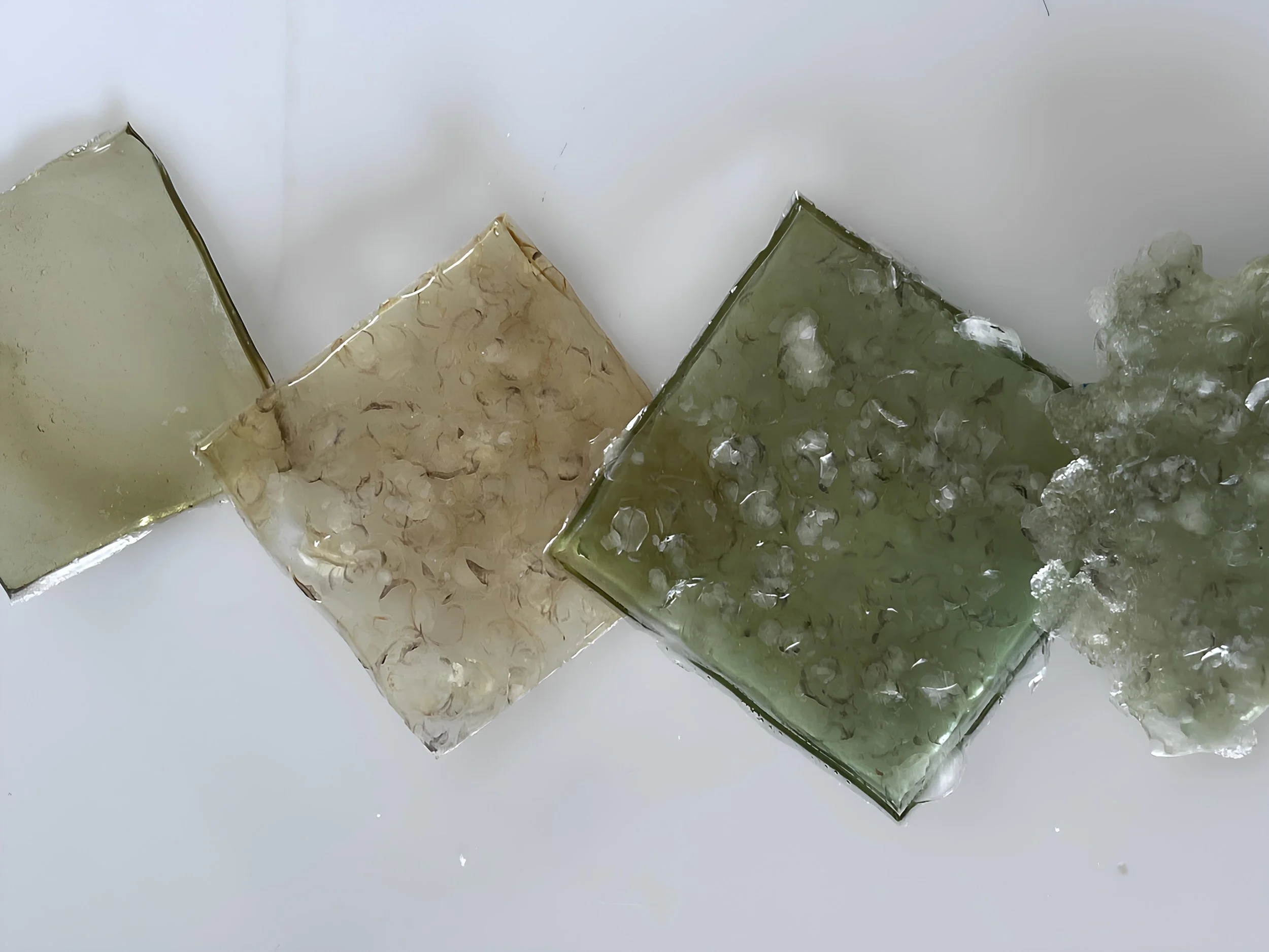
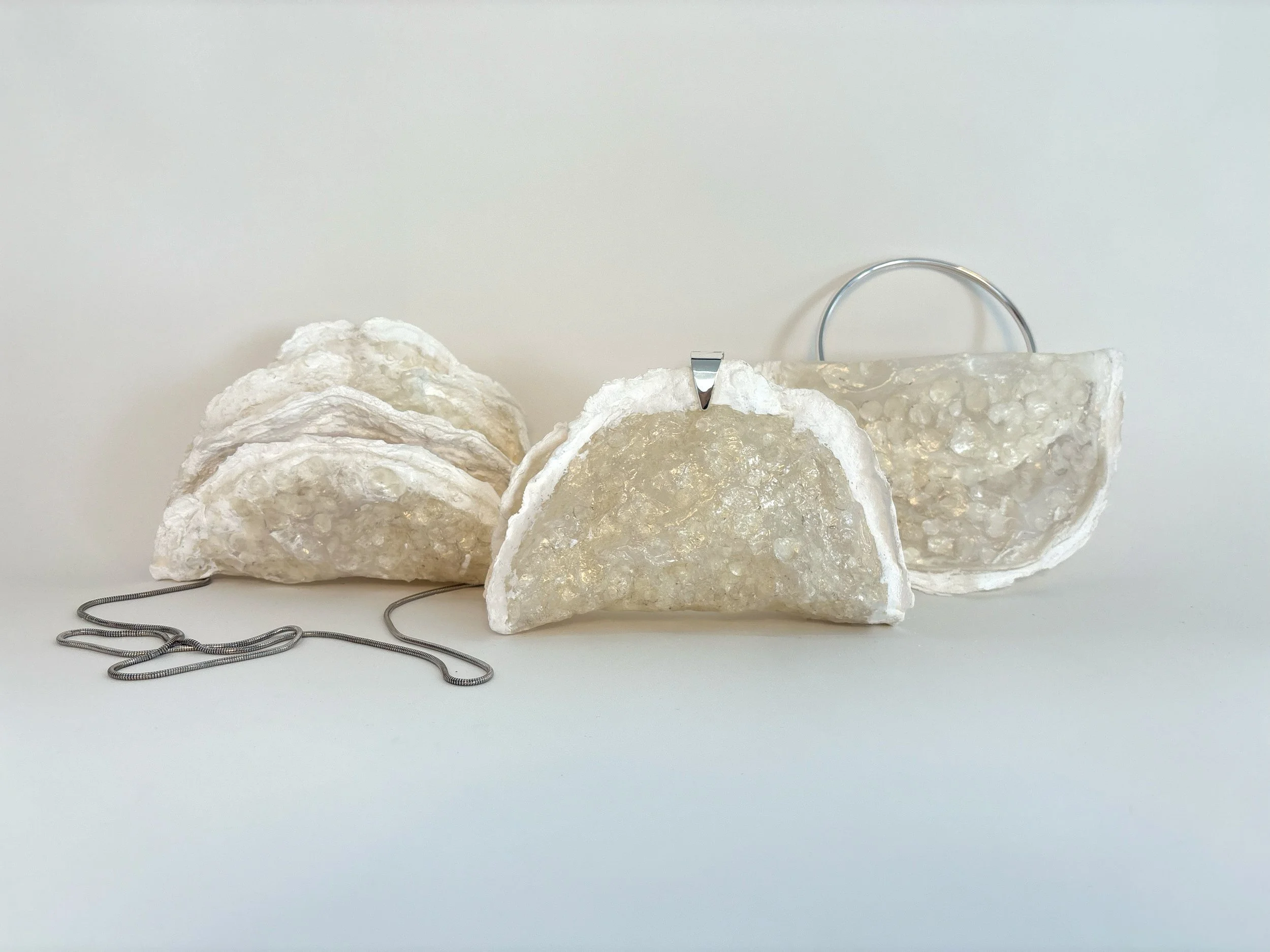
MRG — Exploring marine byproducts through material R&D
Originating in Ithra's 2024 Tanween Sustainable Fashion Challenge, MRG investigates a composite using fish scales and desalination salt.
IBDÅ led the post-challenge R&D as production partner, carrying out more than 90 material trials to refine the formulation and explore its application in fashion and accessory prototyping.
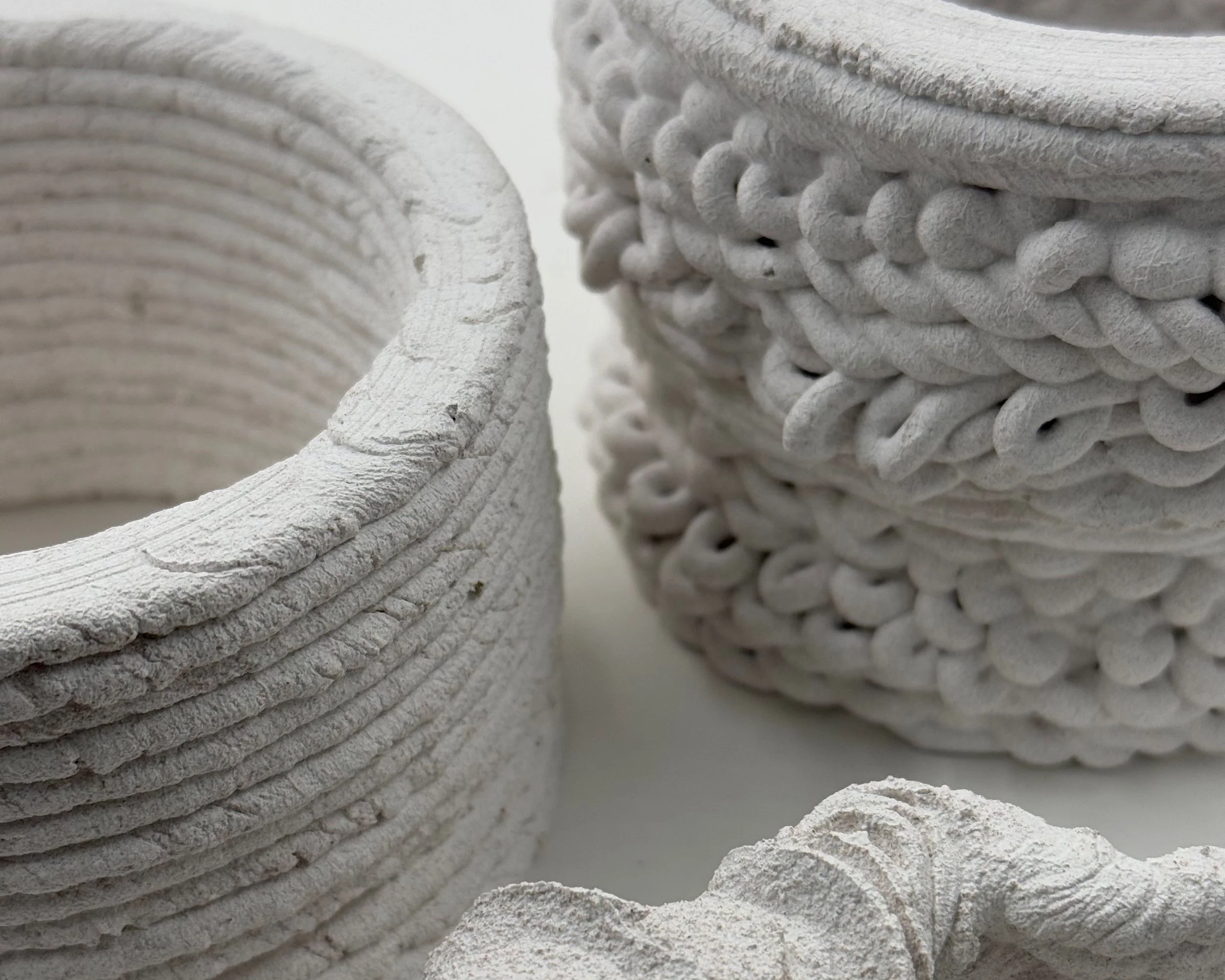
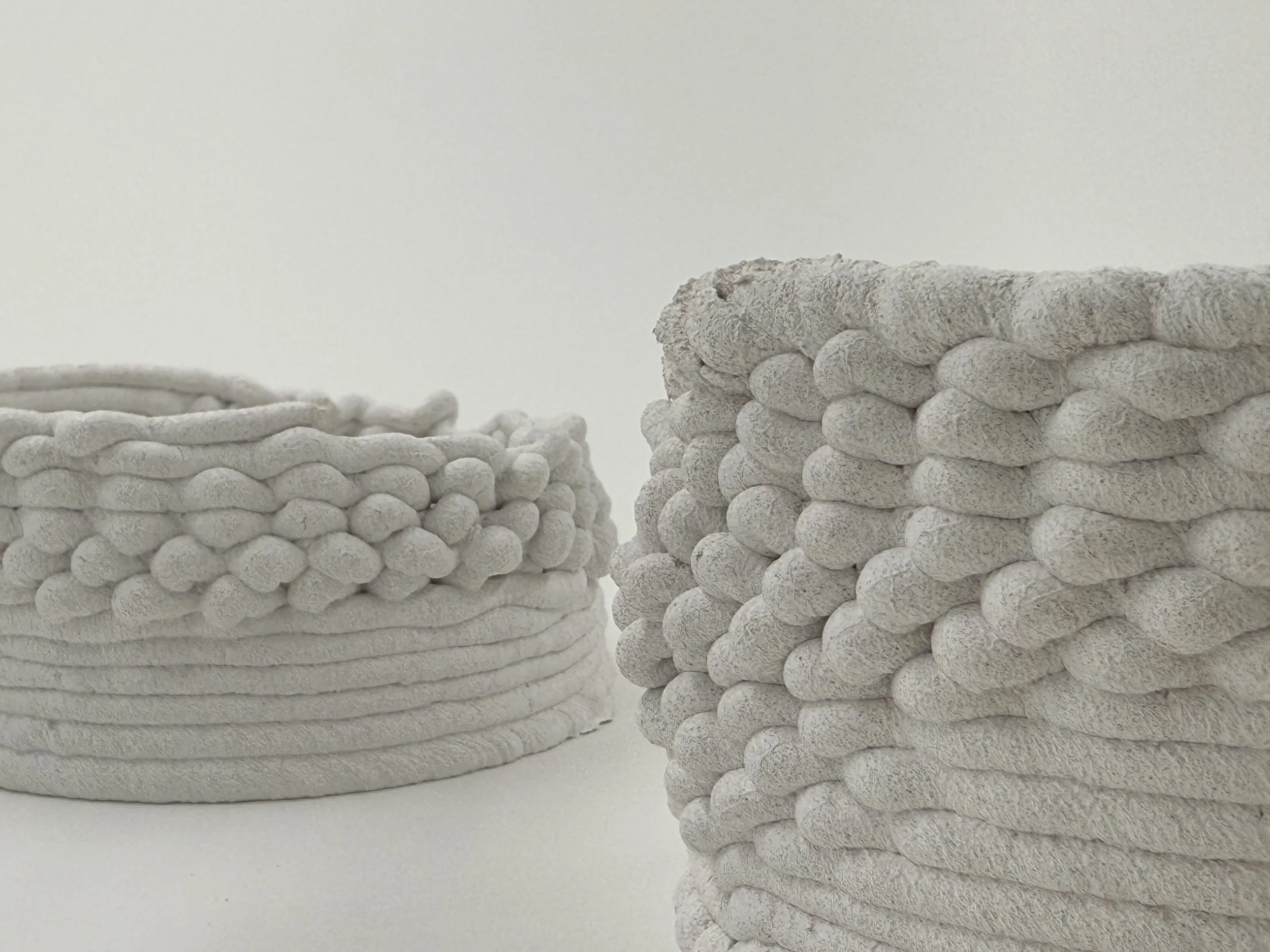
Åthar — Investigating desert sand and robotic fabrication
Åthar is an ongoing research project exploring desert-sand materials, robotic fabrication and CO₂-related material processes, with process feedback through Tasni.ai.
Its development connects formulation, fabrication and application questions, with continued investigation into printability, structural performance and environmental impact.
COLLABORATION
An external research and development partner for your next material challenge.
We work with manufacturers, product teams, brands, cultural institutions, researchers and organizations exploring new uses for local resources.
An engagement can begin with a focused question and expand as the evidence supports further development. For engagement models and broader product development, see R&D & Prototyping. Where the brief concerns intelligent equipment or integrated hardware and software, see Smart Products & IoT.
-
Suitable starting point: You have a resource or application and need a research direction
Possible outcome: Prioritized opportunities and a focused development brief
-
Suitable starting point: You need to investigate a material hypothesis
Possible outcome: Documented trials, sample sets and findings
-
Suitable starting point: A material needs to be explored through a product or component
Possible outcome: Fabrication studies and a testable application prototype
-
Suitable starting point: The challenge requires multiple rounds of research and development
Possible outcome: Phased experiments, technical records and next-stage decisions
-
Suitable starting point: You want to mobilize a team around a material or circularity challenge
Possible outcome: Workshops, selected concepts and a scoped route into prototyping
-
Yes. We can investigate its characteristics, preparation requirements and possible applications, then develop material trials and prototypes. The research establishes which directions are promising and which need further work.
-
Yes. IBDÅ conducts material research and prototyping in Dubai and collaborates with clients and partners across the UAE, the region and internationally. The project is structured around its resources, intended application and research questions.
-
Yes. We can review the existing documentation, investigate a performance or fabrication question and develop application prototypes. Confidentiality and existing intellectual property are addressed before research begins.
-
Our Åthar research explores CO₂-related material processes alongside desert-sand fabrication. We can discuss related experimental briefs and the specialist measurement needed to assess carbon uptake and wider environmental implications.
-
Those conclusions require evidence relevant to the material, application and conditions of use or disposal. We can help develop the research and testing plan and coordinate specialist assessment where needed. An exploratory sample alone does not establish environmental performance.
-
Yes. We can support continued development through application design, fabrication trials, technical documentation and coordination with production and specialist partners. Moving from samples to repeatable production may require further testing and process development.
-
Deliverables are agreed for each phase and can include research findings, sample sets, trial records, application prototypes, design files, test results and development recommendations.
-
That finding informs the next decision. We document what was learned and review whether to change the formulation, reconsider the application, continue investigating or stop that direction.
FAQ
Questions you may have
•
biomaterials
•
local resources
•
waste streams
•
material trials
•
circular design
•
fabrication
•
evaluation
•
application prototypes
• biomaterials • local resources • waste streams • material trials • circular design • fabrication • evaluation • application prototypes
START A PROJECT
Which resource, material or process deserves a different future?
Bring us the question, the sample or the opportunity. We will help turn it into a focused program of research, making and evaluation.